Zentri: AI-Powered Financial OS
An open-source, privacy-first financial OS that aggregates assets across Thai stocks, US equities, crypto, mutual funds, and gold — then uses LLMs to deliver institutional-grade analysis running locally via Docker.
The Problem
Managing a portfolio across Thai stocks, US equities, crypto, mutual funds, and gold requires jumping between five different apps — none of which talk to each other, and none of which give you a plain-language answer to: what should I do right now?
Zentri is a self-hosted financial OS that aggregates everything in one place and answers that question using LLMs. It runs entirely on your machine via Docker — your data never leaves your system.
Features
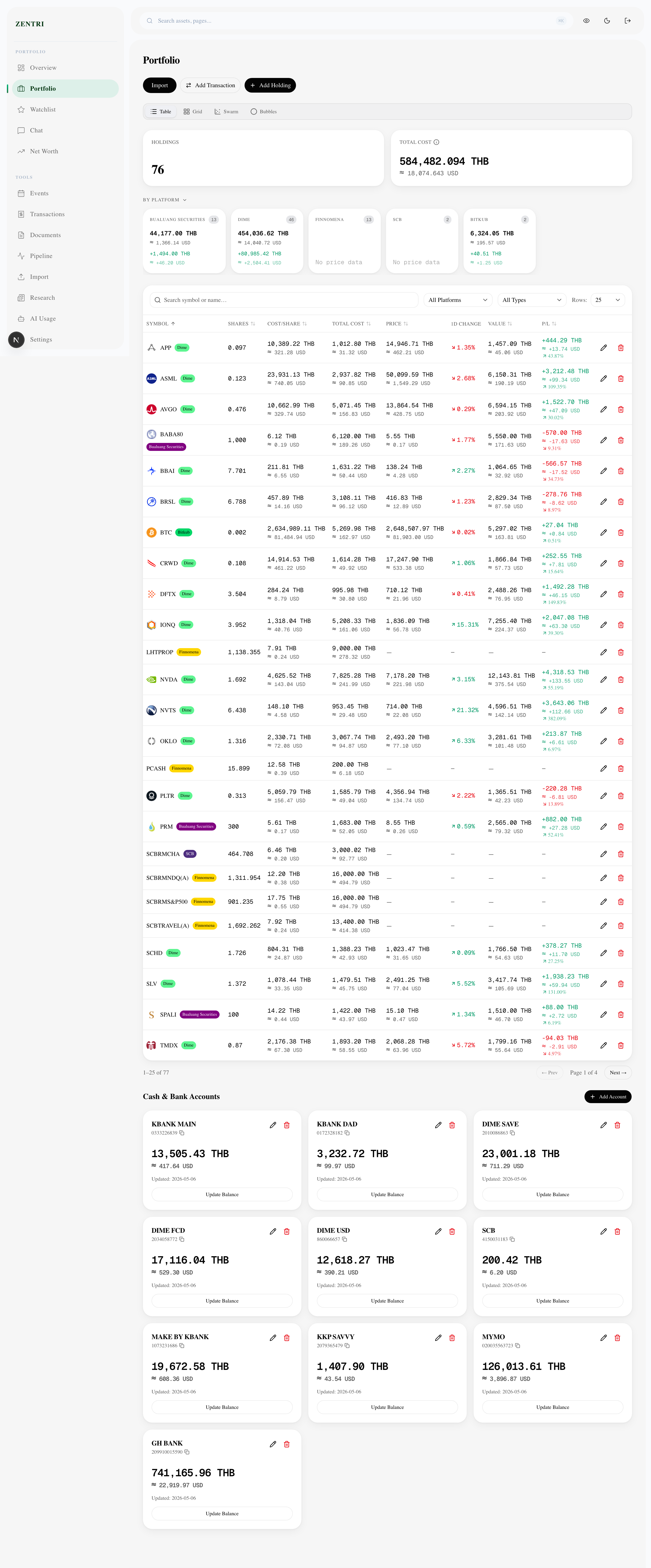
- Multi-asset tracking — Thai stocks (SET), US equities, crypto, mutual funds, gold
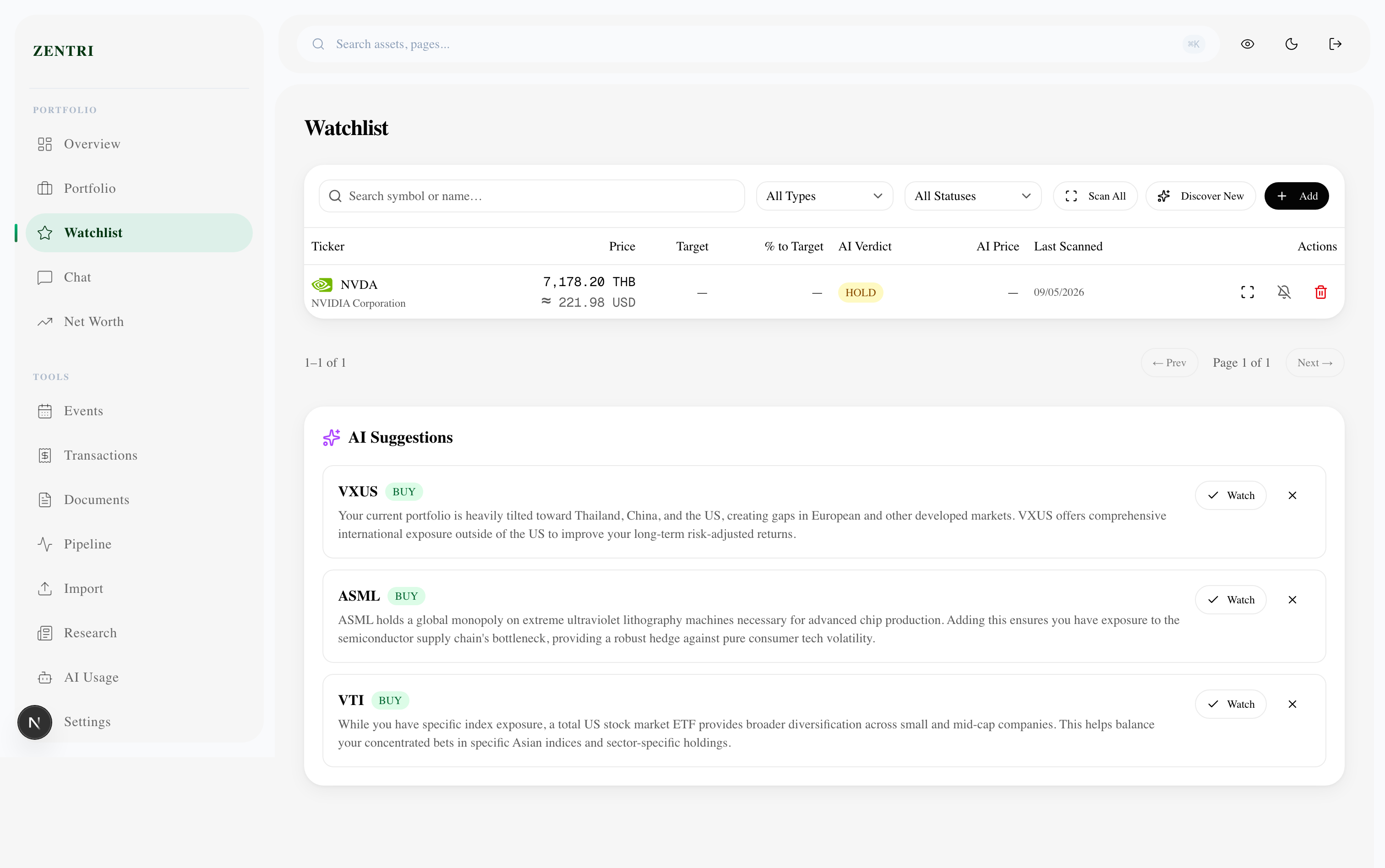
- AI analysis — per-asset buy/sell/hold verdicts with reasoning via Claude, GPT-4, Gemini, or local Ollama
- Two-tier LLM routing — fast local model for quick scans, cloud model for deep analysis
- Document RAG — upload fund fact sheets and annual reports; LLM cites them in analysis
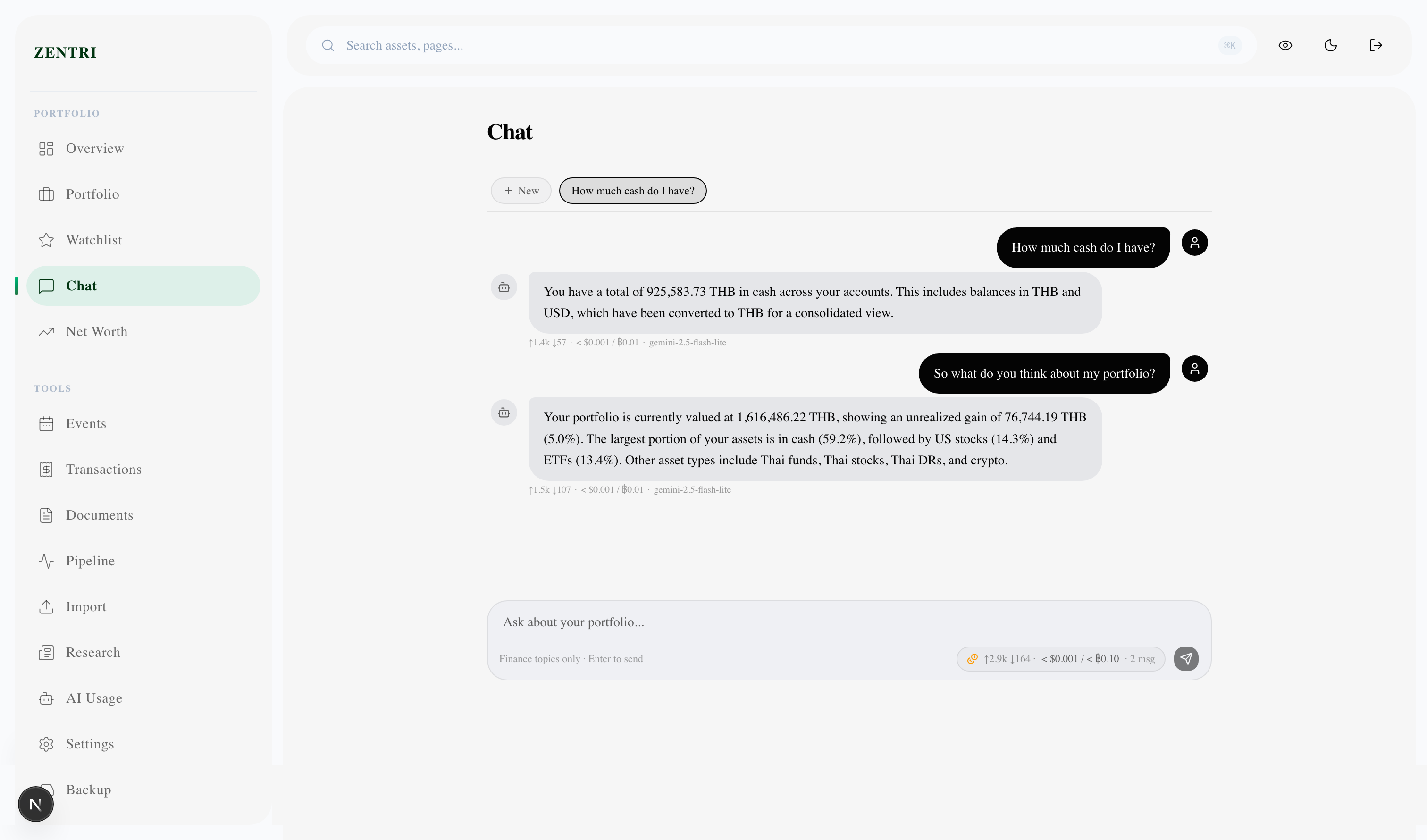
- Conversational chat — ask questions about your portfolio in natural language
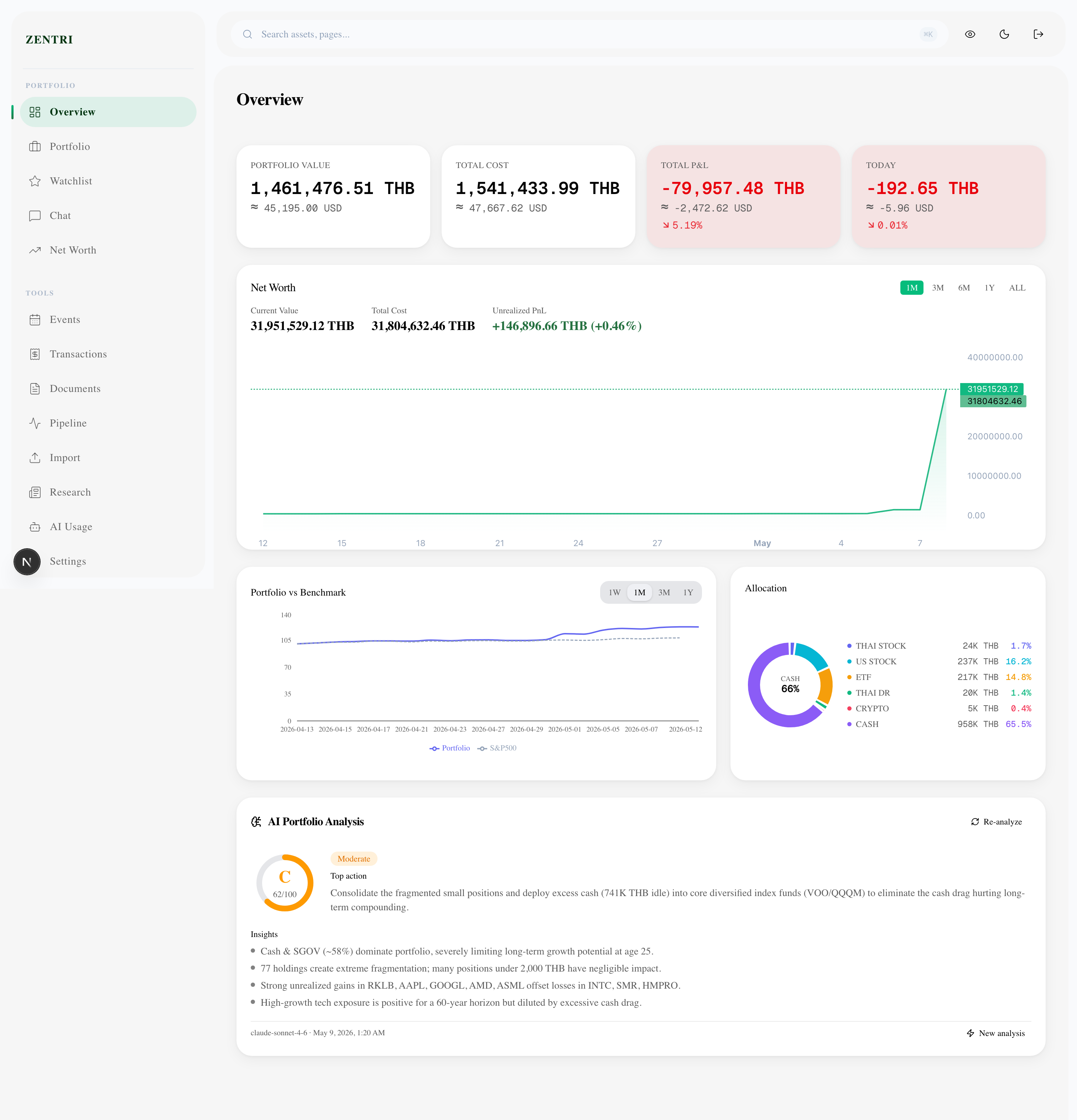
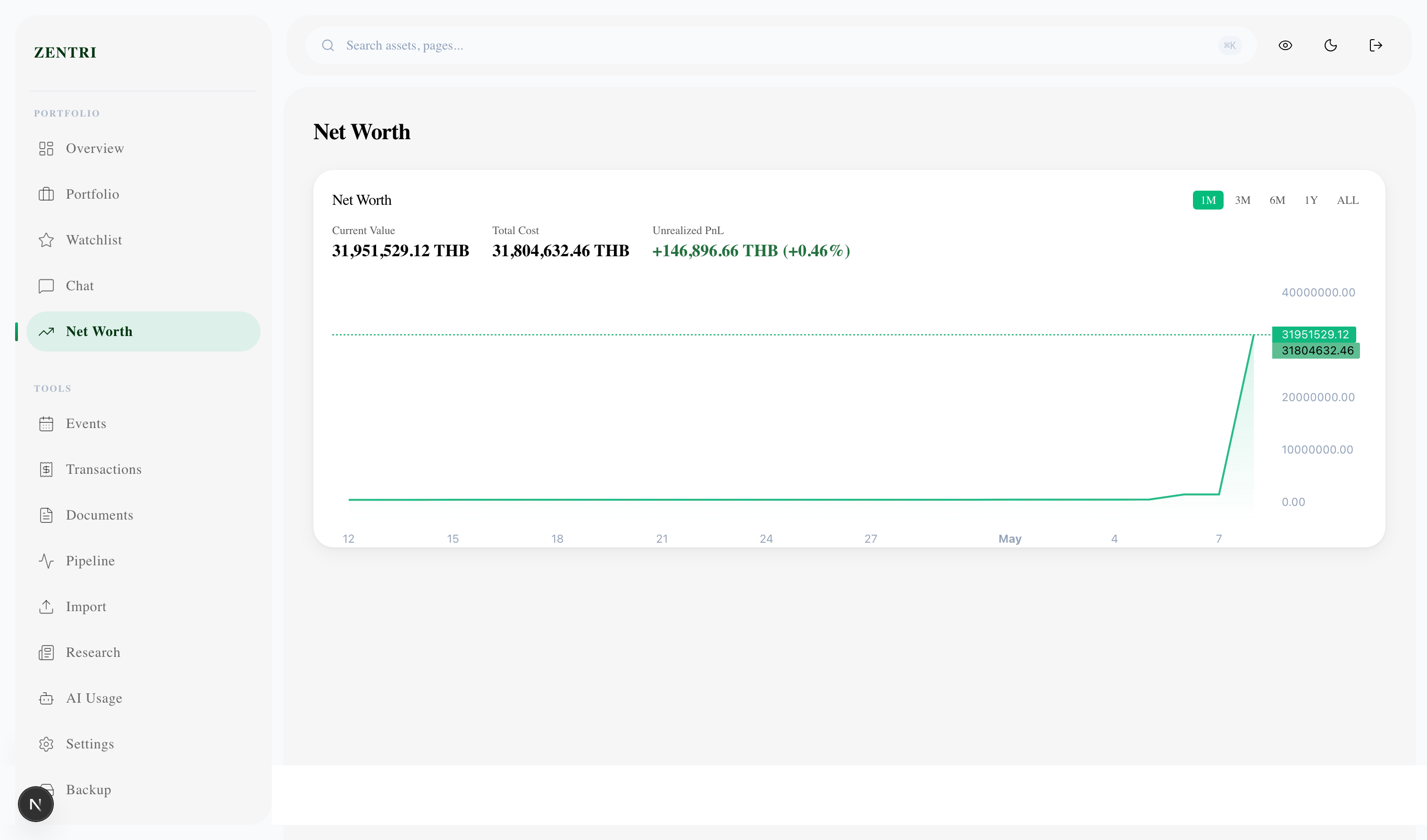
- Net worth timeline — daily snapshots of total wealth across all asset classes
- Watchlist with AI thesis — track assets you don't own yet with AI-generated entry theses
- IPO calendar — upcoming IPOs with AI analysis
- Dividend calendar — track upcoming and received dividends
- CSV import — auto-maps broker CSV formats using LLM column detection
System Architecture
Key Technical Decisions
| Decision | Chosen | Rejected | Why |
|---|---|---|---|
| Job queue | Redis + ARQ | Celery | Simpler, no separate broker |
| Vector store | ChromaDB | Pinecone | Local-first, zero cost |
| LLM routing | Two-tier | Single model | Cost vs quality trade-off |
| Time-series | TimescaleDB | InfluxDB | Stays in PostgreSQL ecosystem |
| Auth | JWT + bcrypt | OAuth | Self-hosted, single-user |
Screenshots
What I'd Do Differently
Start with the data pipeline before the UI. I spent two weeks building a beautiful dashboard before realising the data ingestion was unreliable — polish means nothing without trustworthy data underneath.
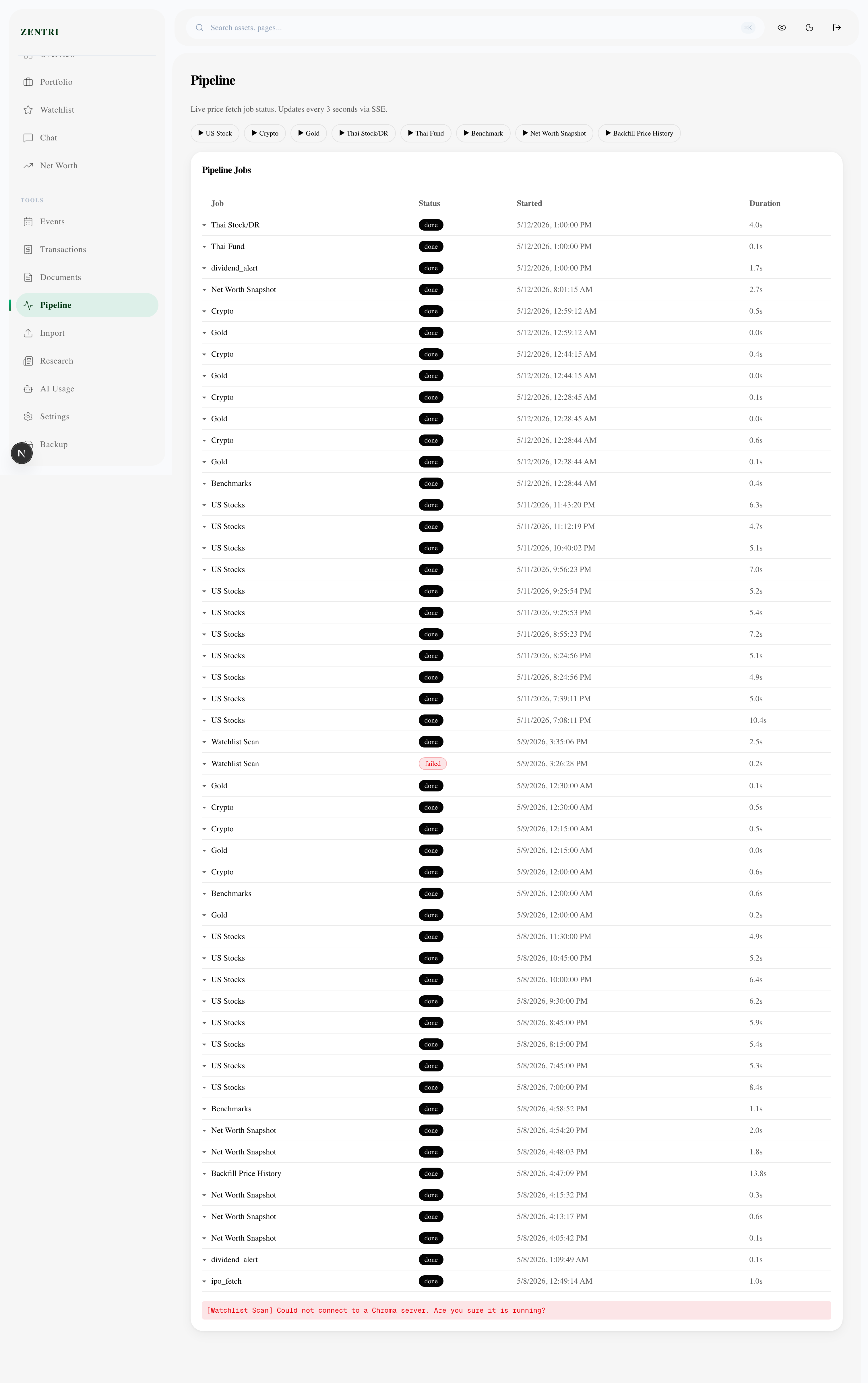
I'd also add end-to-end integration tests from day one. The LLM pipeline has several moving parts (queue → worker → LLM → DB), and unit tests don't catch the integration failures.